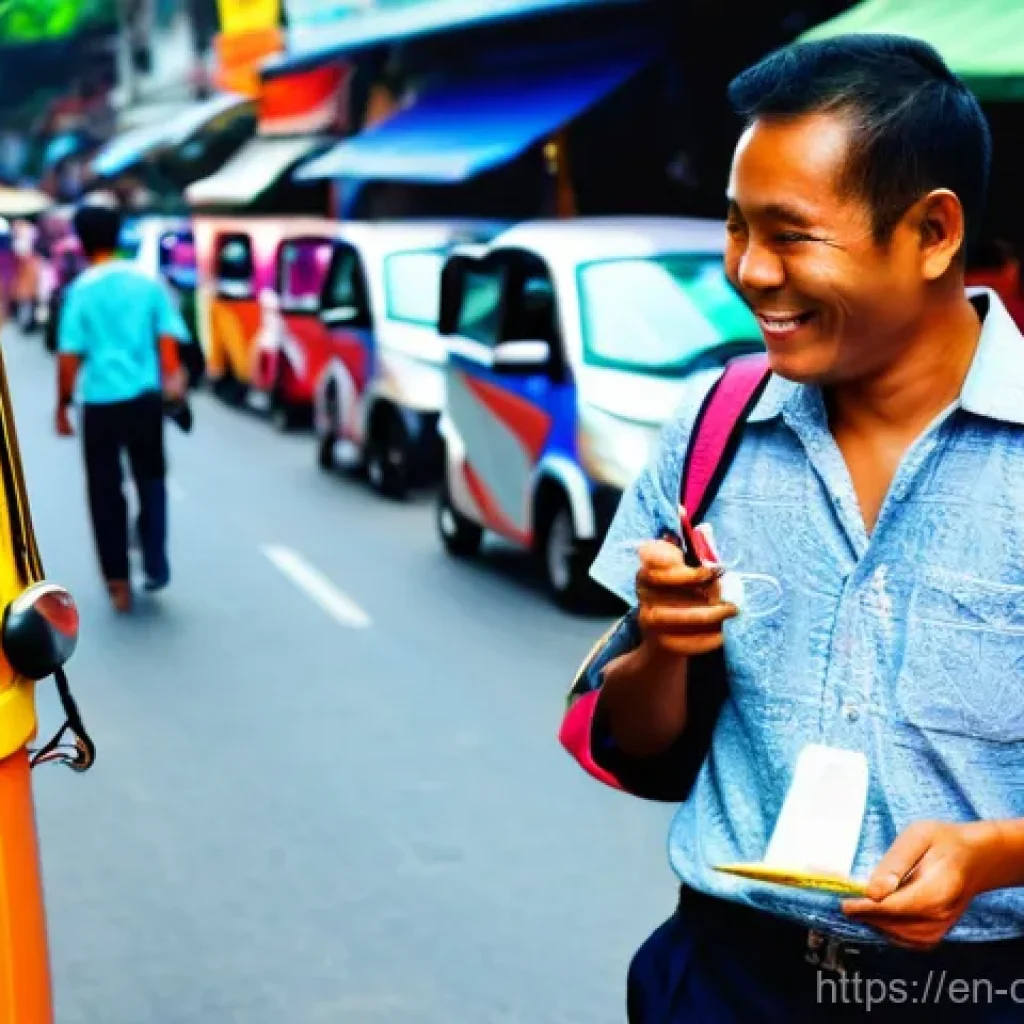
There’s nothing quite like the thrill of stepping off a plane into a vibrant, new country. The sights, the sounds, the smells – it’s an adventure waiting to happen!
But then comes the moment you need to get from the airport to your hotel, or from one bustling market to another, and you’re faced with a sea of local transport options.
Will it be a sleek, air-conditioned taxi, or perhaps a zippy, open-air tuk-tuk? Trust me, I’ve been there countless times, feeling that exciting mix of anticipation and a tiny bit of apprehension about navigating unfamiliar streets.
It’s easy to feel a bit overwhelmed, wondering if you’re getting a fair price, if you’re communicating effectively, or if you’re even heading in the right direction.
While ride-sharing apps have certainly changed the game, there’s still a unique charm, and often a practical necessity, to understanding how traditional taxis and iconic local conveyances truly operate on the ground.
From my own adventures across Southeast Asia and bustling metropolises worldwide, I’ve picked up some invaluable insider tips that have saved me both money and headaches, and even led to some of my most cherished travel memories with local drivers.
Forget those online horror stories; getting around doesn’t have to be a source of stress. It can actually be one of the most authentic and memorable parts of your entire journey!
So, are you ready to unlock the secrets to smooth, safe, and savvy local transport? Let’s dive in and precisely discover how to master the art of riding local taxis and tuk-tuks, ensuring your travels are as seamless and authentic as possible!
Cracking the Code: Decoding Fares and Negotiating Like a Pro

The Meter Myth: When to Trust It and When to Haggle
Oh, the trusty taxi meter! It seems like such a straightforward concept, right? You get in, they start the meter, and *voila* – a fair price.
But here’s the thing, my friend, that’s not always the reality, especially when you’re traveling abroad. I’ve learned this the hard way more times than I care to admit, like that one time in Bangkok where a driver ‘forgot’ to turn on his meter until we were halfway across the city, claiming a “fixed price” that was easily double the usual fare!
My rule of thumb is this: if a meter exists and is clearly visible, always insist on using it. If they refuse or say it’s “broken,” it’s a huge red flag.
Politely decline and find another ride. However, in many places, especially with tuk-tuks or other local transport like jeepneys in the Philippines, meters simply don’t exist.
This is where your negotiation skills come into play. Don’t be shy! A friendly smile and a firm, but respectful, approach will get you far.
It helps to have an idea of what a fair price *should* be beforehand, perhaps by checking with your hotel, a local friend, or even a quick search on a ride-sharing app for a comparable route.
Learning the Lingo: Essential Phrases for Smooth Transactions
I know, I know, learning an entire language for a short trip isn’t feasible, but trust me, knowing just a few key phrases can transform your transport experience.
Things like “How much?” (or the local equivalent), “Please,” “Thank you,” and “To [destination]” are absolute game-changers. I recall a trip to Vietnam where simply knowing “Bao nhiêu tiền?” (How much?) and “Cảm ơn” (Thank you) opened up so many warmer interactions with cyclo drivers.
It shows respect and a genuine effort to engage, which often translates into a fairer deal and a much more pleasant ride. Even if your pronunciation is terrible (mine often is!), the effort is always appreciated.
Having your destination written down in the local script or shown on a map on your phone is also a lifesaver. This eliminates misunderstandings due to language barriers and ensures you’re both on the same page about where you’re headed.
Safety First: Navigating Unfamiliar Rides with Confidence
Vetting Your Ride: Spotting Legitimate Operators
When you’re in a new city, stepping into just any taxi or tuk-tuk can feel a bit like a lottery. Is this driver reputable? Am I in good hands?
These are natural concerns, and thankfully, there are some pretty reliable indicators. Legitimate taxis usually have clear markings, official licenses displayed, and often a visible company name or number.
Look for drivers who seem professional, and whose vehicles appear well-maintained. For tuk-tuks and other informal transport, it can be a bit trickier, but often drivers associated with hotels or tourist hubs are more trustworthy.
My personal rule is to avoid anyone who seems overly aggressive or insistent. A polite “no, thank you” is perfectly acceptable. Always make eye contact, and if something feels off about a driver or their vehicle, simply wait for the next one.
Trusting your intuition here is paramount.
Sharing Your Journey: Smart Tech for Peace of Mind
We live in an incredible age of technology, and our smartphones can be powerful allies when it comes to safe travel. Before hopping into any local ride, especially at night or in less familiar areas, I always recommend sharing your live location with a trusted friend or family member.
Apps like WhatsApp or even your phone’s built-in sharing features make this incredibly easy. Additionally, having Google Maps or a similar app open on your phone, following your route in real-time, is a fantastic way to ensure you’re heading in the right direction.
I’ve personally used this countless times to verify drivers are taking the most direct route and not trying to “take the scenic route” for an inflated fare.
It acts as a silent co-pilot, giving you an extra layer of security and confidence throughout your journey.
Beyond the Taxi: Embracing Unique Local Charms
The Thrill of the Tuk-Tuk: An Experience Not to Miss
While taxis offer comfort and air conditioning, sometimes the real adventure lies in embracing the truly local modes of transport. And for me, nothing quite captures that spirit like the humble tuk-tuk.
Yes, they can be noisy, exhilarating, and sometimes a bit dusty, but what an experience! I vividly remember my first tuk-tuk ride through the bustling streets of Siem Reap, Cambodia, feeling the wind in my hair and the vibrant energy of the city all around me.
It wasn’t just a ride; it was an immersion. They’re perfect for short to medium distances, especially in areas with heavy traffic where their maneuverability really shines.
Negotiate your price beforehand, hold on tight, and be ready for an unforgettable journey that’s often a highlight of any trip to Southeast Asia.
Alternative Rides: From Jeepneys to Colectivos
Beyond the ubiquitous taxi and tuk-tuk, many countries boast their own fascinating local transport options that are worth exploring. Think about the colorful, wildly decorated jeepneys of the Philippines, a true cultural icon.
Or the shared ‘colectivos’ found across Latin America, which operate on fixed routes for a fraction of the cost of a private taxi. Each of these offers a unique window into local life, allowing you to rub shoulders with residents and truly feel like a part of the daily rhythm.
While they might require a bit more understanding of routes or a few local words, the rewards are immense – authentic experiences and often significant savings.
I always try to set aside at least one journey to experience these unique local conveyances; they always make for the best stories!
Communication is Key: Bridging the Language Gap with Drivers
Visual Cues and Mapping Apps: Your Best Friends
Even with the best intentions, language barriers can be a real hurdle when trying to get where you need to go. That’s why I’ve come to rely heavily on visual aids and mapping apps.
Before setting out, I always make sure to have my destination clearly marked on a map application like Google Maps. When I get into a taxi or tuk-tuk, I’ll often show the driver the map directly, pointing to my exact location.
This simple act bypasses so many potential misunderstandings. Pictures of landmarks or even the address written in the local script (which you can often get from your hotel receptionist) are also incredibly useful.
I’ve found that a picture truly is worth a thousand words, especially when you’re trying to convey a specific, unfamiliar address to a driver who might not speak a word of English.
It turns what could be a frustrating exchange into a quick, smooth interaction.
The Power of a Phrasebook: A Little Goes a Long Way

While technology is great, there’s something genuinely endearing about making an effort with a local phrasebook or a translation app. Even just learning a few key words like “left,” “right,” “straight,” and “stop” can make a world of difference.
I remember trying to direct a driver through a winding alley in Marrakech with just a few basic Arabic phrases and hand gestures. We probably looked ridiculous, but the driver was incredibly patient, and we both had a good laugh when we finally reached our destination.
These small attempts at communication don’t just help you get around; they often break down barriers and lead to more positive interactions, sometimes even resulting in a little local insight or a recommendation from your driver.
It’s about more than just the transaction; it’s about connecting.
The App vs. Street Hail Debate: Finding Your Sweet Spot
Convenience at Your Fingertips: The Ride-Sharing Revolution
There’s no denying that ride-sharing apps like Uber, Grab, or Bolt have revolutionized travel. The convenience of knowing your fare upfront, seeing your driver’s details, and paying without fumbling for cash is simply unbeatable in many situations.
For me, these apps are a godsend, especially when arriving in a new city late at night or when I’m tired and just want a hassle-free journey. They provide a layer of safety and predictability that can be incredibly comforting.
In many parts of Southeast Asia, Grab is incredibly popular and even offers options for motorcycle taxis, which are a wild (and fast!) experience in themselves.
While they might not be available everywhere, where they are, I often find myself using them for longer distances or when I’m in a rush and need guaranteed pricing.
Old School Charm: The Benefits of a Traditional Hail
But let’s not discount the classic street hail! There’s a certain thrill to flagging down a bright yellow taxi in New York City or hailing a black cab in London.
Sometimes, especially in busy urban centers, a street hail can be faster than waiting for an app-based ride. Plus, it offers a more spontaneous, often more authentic, travel experience.
You’re directly interacting with a local, getting a sense of the immediate surroundings. For shorter distances or when you’re just exploring and want to hop from one point of interest to another without much fuss, the traditional taxi can be incredibly efficient.
My advice? Don’t be afraid to try both! See which option feels right for the moment and the destination.
| Feature | Ride-Sharing Apps (e.g., Uber, Grab) | Traditional Taxis / Tuk-Tuks (Street Hail) |
|---|---|---|
| Price Transparency | Usually upfront fare displayed, less negotiation. | Metered (sometimes), often requires negotiation. |
| Payment Options | Cashless (card, mobile wallet), convenient. | Primarily cash, local currency needed. |
| Convenience | Order from anywhere, track driver, door-to-door. | Flag down on street, often at designated stands. |
| Safety Features | Driver/vehicle tracking, emergency buttons, driver ratings. | Reliability varies; official taxis often have licenses. |
| Cultural Immersion | Standardized service, less direct local interaction. | Direct interaction with local drivers, unique vehicle types. |
| Availability | Limited to areas with app service and drivers. | More widespread, especially in less tech-savvy regions. |
Tipping Etiquette and Cultural Nuances: Showing Appreciation Gracefully
When to Tip and How Much: A Global Guide
Tipping can be a minefield for travelers, can’t it? What’s customary in one country can be an insult in another. My best advice is to do a quick search on local tipping customs for your destination before you even pack your bags.
In many parts of Southeast Asia, for instance, tipping isn’t always expected for short taxi or tuk-tuk rides, but rounding up the fare to the nearest convenient denomination is always a kind gesture and appreciated.
In places like the United States, however, a 15-20% tip for a taxi driver is generally standard. In Europe, it often falls somewhere in between, perhaps rounding up or adding a few euros.
I always carry a small amount of local currency in smaller denominations specifically for tips or for rounding up fares, as it makes the transaction much smoother and more polite.
It’s all about showing gratitude respectfully.
Beyond the Tip: Building Rapport with Your Driver
Sometimes, the best way to show appreciation goes beyond just monetary tips. A genuine smile, a friendly “thank you” in their language, or even a brief, pleasant conversation can go a long way.
I’ve found that even if a driver doesn’t speak much English, sharing a laugh or a simple nod of appreciation can make both of our days a little brighter.
I remember one driver in Rome who went out of his way to point out several hidden gems along our route, even though he barely spoke English. A simple “Grazie mille!” and a slightly larger tip felt like the right way to acknowledge his kindness.
These small human connections are what make travel so incredibly rich and memorable, turning a simple ride into a positive experience that sticks with you long after the journey ends.
Wrapping Up Our Journey
And there you have it, my fellow adventurers! Navigating local transport in unfamiliar lands might seem daunting at first, but with a little preparation and an open mind, it quickly becomes one of the most enriching parts of any trip. From the thrilling chaos of a tuk-tuk to the comforting predictability of a ride-sharing app, each journey offers a unique story and a deeper connection to the place you’re exploring. Remember, it’s not just about getting from point A to point B; it’s about embracing the vibrant tapestry of local life, making memories, and perhaps even sharing a laugh with a driver along the way. Stay curious, stay safe, and keep those travel spirits high!
Essential Travel Hacks for Local Transport
1. Always have local currency in small denominations. This is a game-changer for quick payments, tips, and avoiding awkward situations where drivers might not have change for large bills. It makes every transaction smoother and quicker, especially when negotiating a fare on the fly. You’ll thank yourself for not having to break a large bill for a short ride!
2. Download offline maps and translation apps before you go. Wi-Fi isn’t always reliable, especially when you’re out and about trying to catch a ride. Having your maps ready offline means you can always show your driver where you need to go, and a translation app can help bridge those critical language gaps in a pinch. It’s truly a digital safety net.
3. Be mindful of peak hours and local holidays. Just like at home, public transport and roads can get incredibly busy during rush hour or major festivals. Planning your journeys outside these times can save you significant delays and potentially higher fares. A quick check of local conditions can make a huge difference to your travel comfort.
4. Trust your gut feeling when choosing a ride. If a driver or vehicle doesn’t feel right, don’t hesitate to politely decline and wait for the next one. Your safety and comfort are paramount. It’s better to be a few minutes late than to feel uneasy throughout your journey; there’s always another ride around the corner.
5. Engage respectfully and with a smile. Even if there’s a language barrier, a friendly demeanor and an attempt to use a few local words (like “hello” and “thank you”) can transform the interaction. It fosters goodwill and often leads to a more pleasant experience, sometimes even resulting in a better deal or a helpful local insight. A little kindness goes a long way!
Your Takeaway Guide
Smart travel truly hinges on confident navigation of local transport. Always insist on a meter where available, but be ready to negotiate respectfully in cash-based systems. Leverage technology by sharing your location and using mapping apps for peace of mind. Don’t shy away from unique local conveyances like tuk-tuks or jeepneys for an authentic experience. Finally, embrace cultural nuances in tipping and always communicate with a smile. These simple strategies will not only get you where you need to go but also enrich your journey with unforgettable interactions.
Frequently Asked Questions (FAQ) 📖
Q: How can I make sure I’m not overpaying or getting taken for a ride when I hop into a local taxi or a lively tuk-tuk?
A: Oh, this is such a common worry, and believe me, I’ve had my share of “negotiation lessons” in bustling markets! The key here is confidence and a bit of homework.
First off, always try to agree on a price before you start your journey. If a taxi has a meter, insist they use it. If they “forgot” or say it’s “broken,” that’s usually a red flag.
For tuk-tuks and taxis without meters, especially in places like Southeast Asia, haggling is part of the experience! I’ve found it super helpful to have a rough idea of what a fair price should be.
A quick search online, asking your hotel concierge, or even another tourist who just got off a ride can give you that baseline. Don’t be afraid to walk away if the price feels exorbitant – often, another driver will offer a more reasonable rate.
And a little secret I learned: if you’re trying to get a deal, ask a local shopkeeper or restaurant owner how much they’d expect to pay for the same route; their insight is gold!
Always have smaller denominations of local currency ready, too. Handing over a large bill for a small fare can sometimes lead to claims of not having change, which is another sneaky way to keep a few extra bucks.
It’s all about being prepared and showing you’re not a complete newbie.
Q: What’s the best way to clearly communicate where I need to go, especially when I don’t speak the local language?
A: Ah, the classic language barrier! It can feel like playing charades sometimes, right? But fear not, I’ve found a few tricks that make this so much smoother.
The absolute best thing you can do is have your destination written down in the local language. I always ask my hotel front desk to write out addresses for me, or I’ll save a screenshot from Google Maps with the address clearly visible.
Showing a map on your phone, pointing to the exact location, is incredibly effective. This takes away any guesswork and reduces miscommunication dramatically.
Another fantastic tip, if you’re tech-savvy, is to use a translation app. Google Translate’s conversational mode has been a lifesaver for me in countless situations, allowing me to speak into my phone and have it play the translation aloud.
And here’s a personal touch: if you’re going to a well-known landmark, try to learn the local pronunciation. Even a little effort goes a long way and often gets you a smile and better service.
Always confirm the destination before you set off, perhaps by asking “Is this X?” while pointing at your map or written address. It minimizes those “oops, wrong turn” moments!
Q: Are there any specific safety tips I should keep in mind, or times when I should be extra cautious, when using taxis and tuk-tuks abroad?
A: Absolutely, safety first! While most local drivers are genuinely kind and just trying to earn a living, it’s always smart to be aware. My golden rule is: always trust your gut.
If a vehicle looks dodgy, or the driver makes you feel uneasy, it’s okay to politely decline and wait for the next one. During the day, they’re generally very safe, but when it gets dark, I tend to be a bit more vigilant.
Try to stick to well-lit areas and established taxi stands, and if possible, avoid hailing unmarked vehicles late at night. One tip I swear by, especially when traveling solo, is to text a friend or family member the license plate number or a description of the vehicle if you can, or even pretend to be on the phone giving someone your details.
It’s a subtle deterrent and gives you peace of mind. Also, avoid overtly displaying valuables like expensive cameras or wads of cash – keep them out of sight.
I also prefer sitting directly behind the driver if I’m alone; it gives me a better view of the road and surroundings. Remember, these vehicles are often an incredible way to experience a city, but a little common sense and awareness can make all the difference for a truly worry-free ride!