Ever wondered how ancient history continues to shape modern-day rivalries and complex geopolitical landscapes? It’s truly fascinating, isn’t it, how a single temple perched precariously on a cliff can ignite decades of tension between neighboring nations.
When I first started diving into the Cambodia-Thailand border dispute, I was struck by the sheer depth of emotion and national pride intertwined with every inch of contested land.
This isn’t just about lines on a map; it’s about cultural heritage, sovereign claims, and the lives of people caught in the middle. It’s a situation I’ve personally followed for years, seeing how it impacts everything from regional stability to everyday trade, and the nuances are far more intricate than most realize.
It feels like a historical drama unfolding in real-time, with profound lessons about international relations. Let’s delve deeper into this enduring conflict and uncover the full story.
Ancient Echoes, Modern Frictions: A Sacred Stone’s Tale
The Heart of the Matter: Preah Vihear’s Enduring Mystique
It’s truly wild to think how a single, ancient temple perched dramatically on a cliff can stir up so much deep-seated emotion and national pride, becoming the focal point of a simmering international dispute.
When I first learned about Preah Vihear, I remember being captivated by its sheer beauty and historical grandeur, imagining the Khmer kings who commissioned such a marvel centuries ago.
This wasn’t just another ruin; it was a testament to an empire’s spiritual and architectural genius. Built mostly between the 9th and 12th centuries, during the same golden age that gave us Angkor Wat, Preah Vihear is a Hindu temple dedicated to Shiva, unique for its north-south axial layout, unlike the typical east-facing designs.
Its position atop a 625-meter cliff in the Dângrêk Mountains, forming a natural border, gives it a spiritual elevation, almost like an ascent to the divine.
But, as I’ve followed this story, it’s become heartbreakingly clear that this architectural wonder, a UNESCO World Heritage site, is also a source of intense contention, a place where history and identity clash.
It’s not just about who owns the stones, but about who owns the narrative, the heritage, and the very essence of a nation’s past.
A Line in the Sand (or on a Map): The Roots of Disagreement
The tangled web of this dispute really begins over a century ago with the Franco-Siamese treaties of 1904 and 1907. These treaties were meant to define the border between Siam (now Thailand) and French Indochina (which included modern Cambodia).
The agreement stated the boundary in this particular area should follow the watershed line of the Dângrêk Mountains. Seems straightforward enough, right?
But oh, how complicated things get when cartographers enter the scene. French surveyors drew up maps that, in the area around Preah Vihear, deviated from that watershed line, placing the temple firmly within what was then Cambodian territory.
Thailand, back then, didn’t explicitly object, and this “silence” would later become a crucial point. Fast forward to 1954, after Cambodia gained independence from France, Thai troops moved into the temple area, effectively occupying it.
This sparked Cambodia’s appeal to the International Court of Justice (ICJ) in 1959, igniting a legal battle that would echo for decades. It’s a stark reminder that even seemingly clear historical agreements can leave room for profound, and sometimes violent, disagreements.
Justice on Paper, Tension on the Ground
The ICJ’s Verdicts: A Quest for Clarity
When Cambodia first took Thailand to the International Court of Justice in 1959, the world watched to see how this ancient relic’s fate would be decided.
In 1962, the ICJ delivered its judgment, declaring that the Temple of Preah Vihear was situated on Cambodian territory and obligating Thailand to withdraw any military or police forces stationed there.
Thailand argued the French map was erroneous and that the temple’s accessibility from the Thai side, or its true watershed location, meant it should be theirs.
But the Court largely based its decision on Thailand’s implicit acceptance of the map over the years. For a while, the issue lay relatively dormant, especially as Cambodia entered periods of civil unrest.
However, the underlying territorial ambiguities never truly vanished. The dispute reignited with force in 2008 when Cambodia nominated Preah Vihear as a UNESCO World Heritage Site.
This was a huge moment of national pride for Cambodia, but it was seen as a provocation by some in Thailand, leading to protests and border clashes. It always amazes me how quickly cultural pride can turn into political fodder, escalating tensions that then impact real people.
Beyond the Temple: Contested Vicinity and Lingering Shadows
The 1962 ruling, while clear on the temple’s sovereignty, left some grey areas regarding the surrounding territory. This ambiguity proved to be a persistent thorn in the side of bilateral relations, fueling further clashes between 2008 and 2011.
I remember following the news during those years, feeling the helplessness as reports of casualties and displaced villagers emerged. It just brought home the point that legal judgments, no matter how definitive, sometimes aren’t enough to quell deep-seated historical grievances and nationalist sentiments.
Cambodia, seeking further clarification, requested an interpretation of the 1962 judgment from the ICJ in 2011. In 2013, the Court clarified that Cambodia had sovereignty over the entire promontory of Preah Vihear and that Thailand was obliged to withdraw its forces from that wider area.
Even with this additional clarity, the notion of “demarcation” versus “sovereignty” continued to be debated, leaving room for future disagreements over the exact boundary lines.
It’s like trying to draw a precise line in shifting sand, constantly at the mercy of political tides.
The Human Cost: More Than Just Lines on a Map
Displaced Lives and Shattered Futures
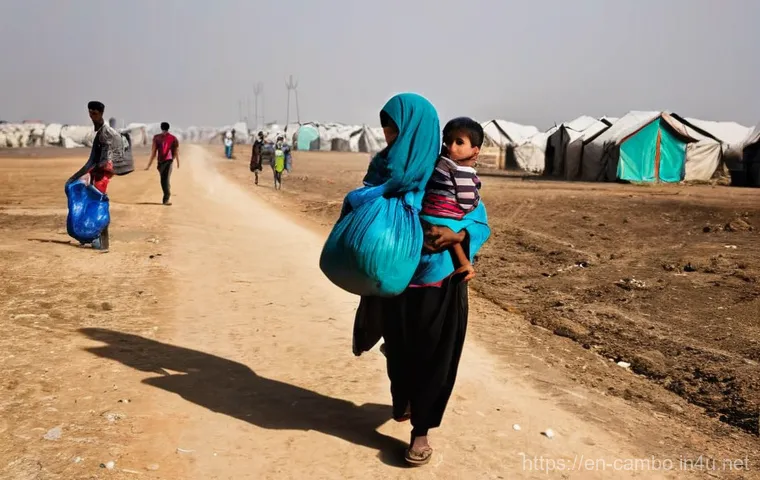
It’s easy to get lost in the historical dates and legal precedents, but what truly hits home is the devastating impact on ordinary people. The most recent escalation in July 2025, which saw heavy fighting and artillery exchanges, forced hundreds of thousands of civilians to flee their homes on both sides of the border.
Can you even imagine packing up your life, leaving everything behind, fearing for your safety and the safety of your loved ones, all because of a territorial dispute?
Reports indicate that over 140,000 people were displaced in a short five-day period, with some estimates even higher at over 300,000. These aren’t just numbers; these are families whose farms were disrupted, whose businesses halted, whose crop yields and livestock were destroyed.
Their ability to repay loans is undermined, leading to immense financial stress. It’s a stark reminder that conflict, no matter its roots, always creates a profound human tragedy.
I think about the mental toll this must take, the uncertainty of ever returning to normalcy, and it makes my heart ache.
Economic Fallout and Lingering Vulnerabilities
The economic ramifications are equally heartbreaking, extending far beyond the immediate border areas. When you have border crossings shutting down and heightened safety concerns, tourism—a vital industry for both nations—takes a massive hit.
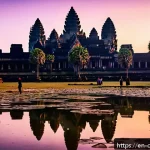
Thailand was Cambodia’s largest source of tourists in 2024, but after the recent clashes, Angkor Wat ticket sales from Thai nationals plummeted by over 92% in July 2025 compared to the previous year.
This isn’t just about big corporations; it’s about vendors, restaurant owners, and hospitality workers whose livelihoods depend on those tourist dollars.
Moreover, trade disruptions are significant. Cambodia, for instance, heavily relies on exporting raw cassava to Thailand. If land transport remains restricted, these exports could sharply decline, impacting countless farmers.
And let’s not forget the migrant workers: approximately 1.2 million Cambodian workers were employed in Thailand in 2024, remitting over $1 billion back home.
Should relations further deteriorate, many could be forced to return, cutting off a crucial income stream and exacerbating an already challenging job market in Cambodia.
From my perspective, it truly highlights how interconnected these economies and lives are, and how quickly that can unravel.
Navigating the Diplomatic Minefield
Ceasefires and the Search for Common Ground
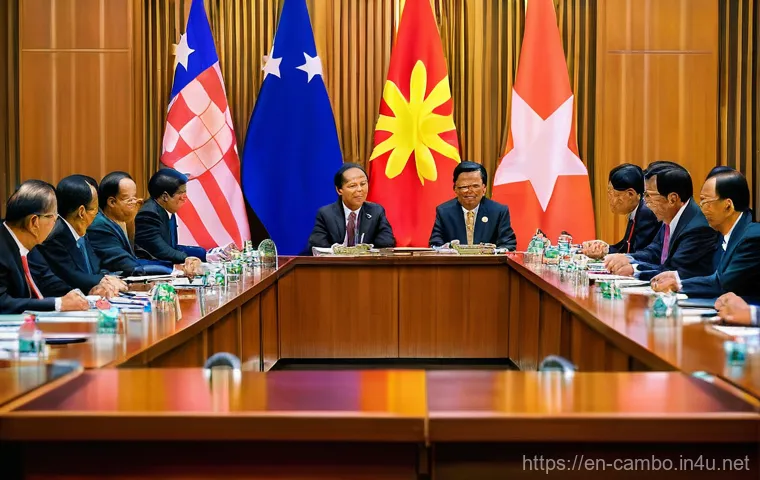
Despite the recent flare-up in July 2025, which saw the worst fighting in over a decade, diplomatic efforts swiftly kicked into gear, largely thanks to regional mediation.
Malaysia, as the ASEAN Chair, played a crucial role in brokering an “immediate and unconditional ceasefire” on July 28, 2025, in Kuala Lumpur. This initial agreement was a much-needed breath of fresh air, a testament to the fact that even amidst intense conflict, a path to de-escalation can be found.
The two nations have since agreed to a 13-point plan, including allowing observers from ASEAN member states to monitor the ceasefire. This kind of third-party involvement, I believe, is absolutely vital for building trust and ensuring compliance when emotions run high.
Discussions through mechanisms like the General Border Committee (GBC) have resumed, focusing on practical steps like withdrawing heavy weapons, mine clearance, and partially reopening border crossings.
It’s a slow, painstaking process, but seeing these efforts gives me a sliver of hope for a more peaceful future.
Lingering Issues and the Road Ahead
Even with ceasefires in place, the path to a lasting resolution is fraught with challenges. One particularly sensitive issue right now is the detention of 18 Cambodian soldiers by Thai forces shortly after the July 28 ceasefire.
Cambodia is making strong diplomatic efforts, appealing to humanitarian law and involving the UN and ICRC, to secure their release. However, Thailand reportedly has demands in exchange, turning a humanitarian issue into a bargaining chip, which honestly feels quite frustrating.
Beyond this, the underlying territorial dispute itself remains unresolved in its entirety, with both governments needing to balance national interest and domestic political pressures.
The recent conflict has also shed light on other issues, like cross-border scam operations, which both countries are now working to suppress. It’s a complex tapestry of historical grievances, modern challenges, and the constant need for dialogue.
From my observations, true peace will require a sustained commitment to cooperation and mutual respect, going beyond mere ceasefires to build genuine bridges between these two proud nations.
| Key Aspects of the Cambodia-Thailand Border Dispute | Details and Impact |
|---|---|
| Primary Flashpoint | Preah Vihear Temple, an 11th-century Hindu temple. |
| Historical Roots | Franco-Siamese treaties of 1904/1907 and differing interpretations of maps. |
| ICJ Rulings | 1962: Temple sovereignty granted to Cambodia. 2013: Clarified sovereignty over the entire promontory for Cambodia. |
| Recent Conflict (2025) | Intense fighting in July, resulted in dozens of deaths and over 140,000 displacements. |
| Economic Impact | Significant decline in tourism (e.g., 92% drop in Thai visitors to Angkor Wat), disruption of cross-border trade (cassava exports, other goods), and risks to migrant worker remittances. |
| Humanitarian Impact | Mass displacement of civilians, disruption of livelihoods, mental health concerns, and casualties on both sides. |
| Diplomatic Efforts | ASEAN-brokered ceasefire (July 28, 2025), General Border Committee (GBC) meetings, and ongoing talks about troop withdrawal, mine clearance, and border reopening. |
Beyond Borders: Learning from Enduring Conflicts
The Broader Implications for Regional Stability
When we zoom out from the immediate details of the Cambodia-Thailand dispute, it’s clear that these kinds of enduring conflicts have ripple effects across an entire region.
Southeast Asia is a vibrant, interconnected tapestry of nations, and instability in one corner can easily affect another. The recent 2025 conflict, even though short-lived, froze billions in cross-border trade and highlighted the weaknesses in regional border management systems.
It reminds us that peace isn’t just the absence of war; it’s an active, ongoing effort to build and maintain trust, especially among neighbors. I’ve personally seen how political crises within nations can quickly spill over and exacerbate external tensions, making an already delicate situation even more volatile.
The way these nations navigate their differences sets a precedent, not just for them, but for the wider international community, showing how historical wounds can either fester or, hopefully, begin to heal through dialogue and mutual respect.
A Call for Continued Dialogue and Empathy
Ultimately, the story of Preah Vihear and the border dispute isn’t just about ancient stones or lines on a map; it’s about people, history, and the very definition of national identity.
It’s a powerful testament to how deeply cultural heritage can intertwine with sovereign claims, and how devastating the consequences can be when those claims clash.
From my experience following global events, the path forward is never simple, but it always starts with genuine dialogue and a willingness to understand the other side’s perspective, even when it feels impossible.
Countries like Malaysia, as the current ASEAN Chair, stepping in to mediate, offer a glimmer of hope that regional bodies can play a vital role in preventing full-blown crises.
It’s imperative that both Cambodia and Thailand continue to honor ceasefires, engage in the various bilateral and multilateral mechanisms available, and prioritize the welfare of the communities most affected.
When all is said and done, the true victory won’t be in claiming every inch of contested land, but in fostering a relationship where both nations can thrive side-by-side, their shared history acknowledged, and their future built on mutual understanding.
Concluding Thoughts
It’s truly humbling to reflect on how a place of such profound historical and spiritual significance like Preah Vihear can become a flashpoint for intense geopolitical friction.
Following this story, I’ve realized that behind every border dispute, every legal ruling, and every diplomatic negotiation, there are real people whose lives are upended and futures put on hold.
It’s a powerful reminder that while we cherish our heritage, the human cost of unresolved conflict is always too high. My hope is that the ongoing dialogues and the spirit of cooperation, however fragile, will ultimately pave the way for a lasting peace, allowing both nations to celebrate their shared history without fear.
Useful Information
1. Always cross-reference your travel plans with official government advisories, especially when considering areas near international borders or known historical disputes. These resources provide the most current and accurate safety information, which can change rapidly. A quick check before you go can save you a lot of trouble and keep you safe.
2. To truly grasp the complexities of international relations, dive deep into news from diverse, reputable sources, not just one. Understanding multiple perspectives, historical contexts, and current events helps build a more nuanced and empathetic view of global issues, moving beyond simple headlines to deeper understanding.
3. Consider supporting non-governmental organizations (NGOs) that work on conflict resolution, cultural preservation, or humanitarian aid in affected regions. These organizations often play a critical role on the ground, offering assistance and fostering dialogue where official channels might be strained, making a tangible difference in people’s lives.
4. Engage with local communities and experts when possible to gain firsthand insights into how historical disputes impact everyday life. Personal stories and direct experiences often illuminate the human dimension of conflict far more vividly than official reports, fostering a deeper connection and understanding of the issues at hand.
5. Remember that heritage sites like Preah Vihear are not just tourist attractions; they are living testaments to human history and culture. Approaching them with respect and an awareness of their significance, especially in contested areas, enriches your travel experience and promotes responsible tourism.
Key Takeaways
The Enduring Significance of Preah Vihear
This ancient Hindu temple stands as a testament to the rich architectural and spiritual legacy of the Khmer Empire, but it has also, paradoxically, become the epicenter of a protracted and often volatile territorial dispute between Cambodia and Thailand.
My journey through understanding this issue has shown me that the temple’s beauty is matched only by the intensity of the nationalistic sentiments it ignites.
The 1962 and 2013 International Court of Justice rulings clarified Cambodia’s sovereignty over the temple and its immediate promontory, yet these legal decisions haven’t entirely resolved the underlying border demarcation challenges, leading to lingering ambiguities and periodic flare-ups that truly underscore the intricate dance between law, history, and national pride.
Profound Human and Economic Consequences
What truly resonates with me is the devastating toll these conflicts take on ordinary people. The July 2025 clashes, for instance, forced hundreds of thousands of civilians to abandon their homes, farms, and livelihoods, creating a humanitarian crisis that extends far beyond the immediate battle lines.
I’ve read countless reports about the disruption to cross-border trade, with vital agricultural exports like cassava being severely impacted, and the significant decline in tourism, which directly hits local businesses and families who depend on it.
Moreover, the welfare of migrant workers, a crucial economic lifeline for many Cambodian families, hangs precariously in the balance. It’s a stark reminder that geopolitical tensions aren’t abstract concepts; they ripple through economies and shatter individual lives with heartbreaking efficiency, making every diplomatic effort absolutely crucial for stability and human well-being.
Frequently Asked Questions (FAQ) 📖
Q: What’s the real story behind the Preah Vihear temple, and why does it ignite such strong feelings between Cambodia and Thailand?
A: You know, when you see photos of Preah Vihear, perched dramatically on that cliff edge in the Dângrêk Mountains, it’s easy to be struck by its sheer beauty and ancient grandeur.
It’s truly a marvel of Khmer architecture, dating back to the 9th to 12th centuries and dedicated primarily to the Hindu deity Shiva. For Cambodia, this UNESCO World Heritage Site isn’t just a collection of ancient stones; it’s a living, breathing symbol of their national pride, cultural heritage, and a powerful link to their glorious past.
From my perspective, having followed this situation closely, that’s where the heart of the emotion lies – it’s a tangible piece of their identity. On the other hand, Thailand also has historical and cultural ties to the region, and they’ve long felt a connection to the temple as well, which makes this more than just a simple boundary dispute.
It becomes a deeply personal issue for both nations, a point of national honor that’s intertwined with centuries of history.
Q: The International Court of Justice has weighed in multiple times, hasn’t it? What were the key rulings, and why do tensions persist despite them?
A: Absolutely, the International Court of Justice (ICJ) has played a significant role, though it hasn’t completely smoothed things over. The most pivotal moment came in 1962 when the ICJ definitively ruled that the Preah Vihear temple itself was situated in Cambodian territory.
Then, in 2013, Cambodia sought a clarification, and the ICJ further affirmed Cambodia’s sovereignty over the entire promontory of Preah Vihear, obligating Thailand to withdraw any military personnel from that area.
Now, you’d think a clear legal ruling from the world’s highest court would settle things, right? But what I’ve observed is that these disputes run deeper than just legal maps.
Nationalistic sentiments and differing interpretations of colonial-era border demarcations, especially concerning the surrounding land which wasn’t fully defined, continue to fuel the fire.
It’s like a family argument where even after the judge rules, old grudges and deep-seated feelings still make it hard to move on. Both countries have such strong historical claims and a profound sense of ownership, making it incredibly challenging to fully accept the other’s narrative, even with international legal judgments in place.
Q: Beyond the historical arguments and court decisions, what’s the actual impact of this ongoing border dispute on people’s lives and the region today, especially with recent developments?
A: This is where the story gets really heartbreaking, because beyond the headlines and legal battles, there’s a very real human cost. From what I’ve personally seen and gathered, the ongoing dispute, especially with recent escalations, profoundly impacts the lives of ordinary people.
We saw this tragically in 2025, with renewed military clashes involving heavy artillery and landmines, leading to civilian casualties and the displacement of hundreds of thousands from their homes.
Think about that – entire communities uprooted, livelihoods destroyed. The economic fallout is immense too. Tourism, a vital industry for both nations, takes a sharp hit; for example, Angkor Wat ticket sales from Thai nationals plummeted dramatically after recent border clashes.
Cross-border trade, worth billions, gets frozen, crippling local economies and the daily existence of farmers and small business owners. Many Cambodian migrant workers in Thailand face uncertainty, and their remittances, crucial for families back home, are at risk.
It’s a truly complex and tragic situation, often exacerbated by domestic political unrest on both sides. While there are always efforts towards de-escalation, like recent agreements on withdrawing weapons and clearing landmines, the deep-seated emotional and practical challenges mean that true, lasting peace for these border communities is still a journey, not a destination.