
Khmer writing developed from South Indian script traditions associated with the Pallava period, then took on local forms in early Cambodia. The earliest known Khmer-language inscriptions date to the early seventh century CE, while the script remains the basis of modern Cambodian writing.
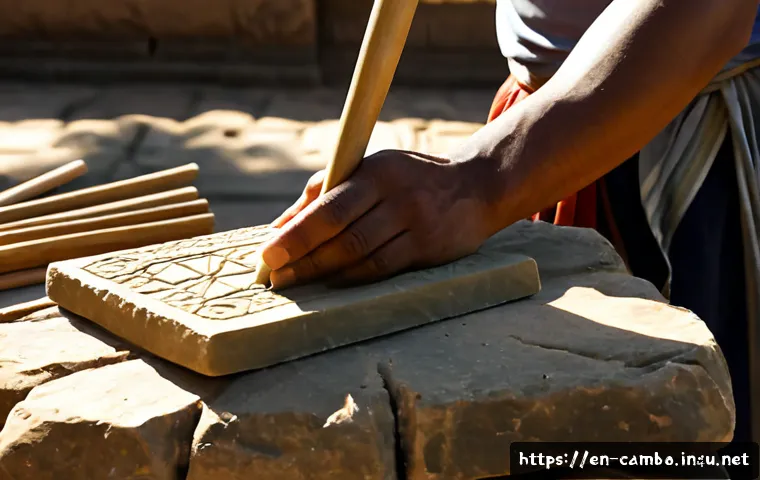
For learners, the key point is that Khmer is an abugida, not a simple alphabet with one unchanging vowel sound per consonant. A beginner course can make the writing system approachable, while a reference book, museum guide, or heritage tour may be more useful for historical context.
The best choice depends on whether your goal is reading modern Khmer, understanding temple inscriptions, or researching Southeast Asian writing history.
At a Glance
- Khmer script is generally understood to have developed from South Indian writing traditions associated with the Pallava period.
- The earliest known Khmer-language inscriptions date to the early seventh century CE and include both Old Khmer and Sanskrit.
- Modern Khmer remains Cambodia’s official language and uses a script descended from earlier Khmer writing forms.
| Writing tradition or stage | What it helps explain | Best resource type for the goal |
|---|---|---|
| Brahmi-related traditions | The wider Indic family of scripts | Academic overview or historical reference book |
| Pallava-era forms | The South Indian connection behind early Khmer development | Specialist script-history guide or course material |
| Early Khmer inscriptions | How local Cambodian letterforms and languages appeared in surviving evidence | Museum guide, inscription catalogue, or heritage-focused tour |
| Modern Khmer | How the script works for present-day reading and language learning | Beginner Khmer alphabet course or practical workbook |
The Short Answer: Where Khmer Writing Came From
A South Indian script heritage adapted in early Cambodia
Khmer writing is generally understood to have grown from South Indian script traditions, especially traditions associated with the Pallava period. That does not mean Khmer was simply copied letter for letter from an Indian model. A writing system can be derived from an earlier tradition while being reshaped for a new language, local writing habits, and changing political or religious needs.
This distinction matters. Saying Khmer was “derived from” South Indian traditions recognizes a historical connection. Saying it was “copied from” can wrongly suggest that Cambodian writers had no role in adaptation. The exact person, workshop, or date responsible for introducing the first Khmer letterforms is not known.
Why the earliest surviving inscriptions matter
The earliest known Khmer-language inscriptions date to the early seventh century CE. These inscriptions provide direct evidence that Khmer writing was established in early Cambodia. They also show that written culture was not limited to one language: early Cambodian inscriptions used both Sanskrit and Old Khmer.
That bilingual setting reflects religious, political, and administrative life. Sanskrit could serve particular learned or ceremonial purposes, while Old Khmer recorded information connected to local society and governance. A reliable guide should explain which language is being discussed instead of treating every inscription as if it were written in the same language.
What “Khmer script” means today
Today, Khmer is the official language of Cambodia, and modern Khmer uses a script descended from older Khmer writing forms. For a learner, the most important structural point is that Khmer is an abugida. Consonant letters carry an inherent vowel that can be changed with vowel signs and other marks.
This is why a chart that presents Khmer as a basic Roman-style alphabet can be misleading. Learning individual consonant shapes is useful, but it is only the first step. A practical course should also teach vowel signs, marks, and how letters work together in real words.
From Brahmi Traditions to Early Cambodian Letterforms
The wider family of Indic writing systems
Khmer belongs within a wider history of Indic writing traditions. This family context helps explain why Khmer is structured around consonants modified by vowel signs rather than around separate, fixed vowel letters in every position.
However, broad family labels should not erase local differences. Scripts may share historical ancestry while having very different letter shapes, spelling conventions, and reading practices. A good historical resource should show connections without implying that related scripts are interchangeable.
Pallava-era connections and local adaptation
The Pallava-era connection is useful because it gives learners a focused way to understand the South Indian background of Khmer script. It is best treated as a historical relationship rather than a shortcut for reading Khmer. Similarities between letterforms can be meaningful, but they do not replace learning Khmer on its own terms.
Local adaptation is central to the story. Early Cambodian communities used inherited writing principles in ways that served their own languages and institutions. The precise sequence of changes between South Indian models and the earliest Khmer inscriptions remains debated, so simplified origin diagrams should be presented as guides, not final proof.
Old Khmer and Sanskrit in stone inscriptions
Stone inscriptions are especially important because they preserve evidence of script, language, and public life together. They can record religious activity, political authority, or administration. Their value is not only visual: the language choice and wording can matter as much as the letter shapes.
When selecting an inscription book or museum guide, look for one that identifies whether a text is in Old Khmer, Sanskrit, or both. Clear transliteration and an explanation of context are more useful than decorative photographs alone.
How the Script Changed Through the Angkor Era and Beyond
Temple inscriptions, administration, and religion
Khmer script developed alongside the Khmer Empire and appears on temple inscriptions, monuments, and later manuscript traditions. Temple sites can be valuable places to see the script in a historical setting, but the letters should not be treated as isolated artwork. They were part of religious, political, and administrative communication.
For travelers, a heritage tour is most useful when the guide explains what inscriptions can tell us, where uncertainty remains, and how the script relates to the site. A general sightseeing tour may mention writing briefly, while a specialist cultural guide may offer more inscription-focused context.
Changes in letter shapes and writing conventions
Over time, letter shapes and writing conventions changed. That is normal for long-lived scripts. A modern Khmer learner may recognize the historical continuity, yet still find older inscription forms difficult to read without guidance.
This is a practical reason to avoid assuming that a modern alphabet chart unlocks temple texts. If your goal is historical reading, choose a reference that includes inscription images, transliteration, and commentary. If your goal is everyday Cambodian literacy, prioritize modern handwriting and contemporary printed forms.
From historical forms to contemporary Cambodian writing
Modern Khmer is not a separate invention from the historical script; it is descended from earlier Khmer writing forms. Still, “descended from” does not mean every feature has remained unchanged. The distance between a historical inscription and a modern textbook can be significant for a beginner.
A well-designed language course should state clearly whether it teaches modern reading, historical forms, or both. This simple check can prevent paying for material that does not match your actual purpose.
Reading the Evidence Without Common Historical Mistakes

Why similar-looking scripts are not necessarily identical
Scripts can look related without being identical. Shared visual features may reflect a common historical background, but they do not prove that letters have the same sound values or the same use. Khmer has also historically influenced some neighboring mainland Southeast Asian writing systems, including Thai script traditions, yet influence does not make the systems interchangeable.
Distinguishing language history from script history
Language history asks how Khmer and other languages were used. Script history asks how written signs developed and were employed. The two overlap, especially in bilingual inscriptions, but they are not the same question.
For example, an inscription may use a script associated with Khmer writing while containing Sanskrit, Old Khmer, or both. A quality academic reference will distinguish the language of a text from the historical development of the letterforms.
When simplified charts and online claims need verification
Simple charts can be helpful for orientation, but they often leave out uncertainty. Be cautious when a source names one exact inventor, gives an overly neat sequence of forms, or claims that every early inscription has a final interpretation. Archaeological research and epigraphic analysis can change how individual inscriptions are dated or understood.
Prefer resources that separate established evidence from interpretation. For history students and heritage researchers, this is usually a stronger sign of quality than a source that promises effortless certainty.
Learning and Visiting: Which Resource Fits Your Goal?
Beginner alphabet courses versus academic reference books
A beginner Khmer alphabet course is usually the right starting point for people who want to read modern signs, names, or basic Cambodian text. Look for lessons that explain consonants, inherent vowels, vowel signs, and common writing patterns rather than offering only flashcards.
An academic reference book is better for readers interested in early inscriptions, Old Khmer, Sanskrit, or the relationship between Khmer and Indic script traditions. It may be less suitable for someone whose immediate goal is conversational Khmer.
Museum guides and heritage tours for travelers
A museum guide or Cambodia heritage tour can add context that a workbook cannot provide. For travelers interested in Angkor-period monuments, the most useful option is one that connects inscriptions to the site’s religious, political, or administrative setting.
Before booking, check whether the guide actually covers inscriptions and writing history. If that topic is only a brief mention, a museum publication or specialist cultural resource may be a better fit.
What to check before paying for a Khmer script resource
Check whether the resource identifies its level and purpose. Does it teach modern Khmer reading? Does it include historical inscriptions? Does it explain transliteration? Does the teacher or author distinguish script history from language history?
For paid courses, books, and guided visits, scope matters more than a broad promise to teach “Khmer culture.” Choose the resource that answers your specific question rather than the one with the longest list of topics.
Selection Criteria and Comparison Summary
Choose a course, reference book, museum guide, or specialist tour based on your goal. Casual travelers should prioritize clear historical context and site-specific explanation. Language learners should prioritize modern letterforms, vowel signs, and guided reading practice. Researchers should look for transliteration, inscription images, language identification, and careful discussion of uncertainty. Before purchasing, compare teacher expertise, the presence of historical context, the intended learner level, and whether the resource explains how Khmer functions as an abugida. For official details and full conditions, check the relevant course, book, museum, or tour page before deciding.
In Closing
Khmer writing has deep connections to South Indian script traditions, but its history is also one of Cambodian adaptation and long-term development. Early seventh-century inscriptions provide important evidence, while Angkor-period monuments show how writing served public, religious, and administrative life. Modern Khmer continues this script tradition in Cambodia today. The most useful learning resource is the one that matches your purpose: modern literacy, historical study, or cultural travel.
Useful Things to Know
1. Khmer is an abugida, so consonants do not always have one fixed vowel value. 2. Early Cambodian inscriptions used both Sanskrit and Old Khmer. 3. Similar-looking scripts can be historically related without being the same system. 4. Modern Khmer materials are not automatically designed for reading historical inscriptions. 5. Historical dates and interpretations may be updated through further epigraphic and archaeological study.
Important Notes
The exact individual, workshop, and date involved in the first introduction of Khmer letterforms are not known. The detailed path from South Indian models to the earliest Khmer inscriptions remains debated. Individual inscription dates, readings, and interpretations should be checked against current scholarly or institutional material, especially when a resource presents a single explanation as certain.
Frequently Asked Questions
Q1. Did Khmer writing come directly from India?
A1. Khmer script is generally understood to have developed from South Indian writing traditions associated with the Pallava period. It is more accurate to say it was derived from and adapted through those traditions than to say it was copied directly from India. The exact sequence of adaptation remains debated.
Q2. What is the best way for a beginner to learn the Khmer alphabet?
A2. Start with a modern Khmer course or workbook that teaches consonants, inherent vowels, vowel signs, and reading practice together. Avoid relying only on a one-page alphabet chart, because Khmer is an abugida rather than an alphabet with one fixed vowel sound per consonant.
Q3. Are Cambodia heritage tours or museum guides worth paying for if I want to understand Khmer inscriptions?
A3. They can be useful if they specifically explain inscriptions, language choice, and historical context at monuments or museums. Check whether the guide covers Old Khmer, Sanskrit, transliteration, or inscription evidence before paying, since many general tours focus more on architecture and sightseeing.